

Master Golang Backend Development with Cocoding AI: Build Production-Ready APIs in Minutes
Master Golang Backend Development with Cocoding AI: Build Production-Ready APIs in Minutes
🎯 Executive Summary
Golang has emerged as the backbone of modern backend development, powering companies like Google, Uber, and Docker. However, setting up robust Golang APIs with proper architecture, middleware, and database connections can be time-consuming. While most AI coding tools focus solely on frontend development with frameworks like Vite.js and React, Cocoding AI stands apart by offering comprehensive full-stack development capabilities, including advanced Golang backend generation.
In this comprehensive guide, we'll explore how Cocoding AI transforms Golang development, enabling you to build production-ready APIs with frameworks like Gin, Fiber, and Beego through intelligent prompting techniques.
📚 Table of Contents
- Why Golang for Backend Development?
- The Full-Stack AI Advantage
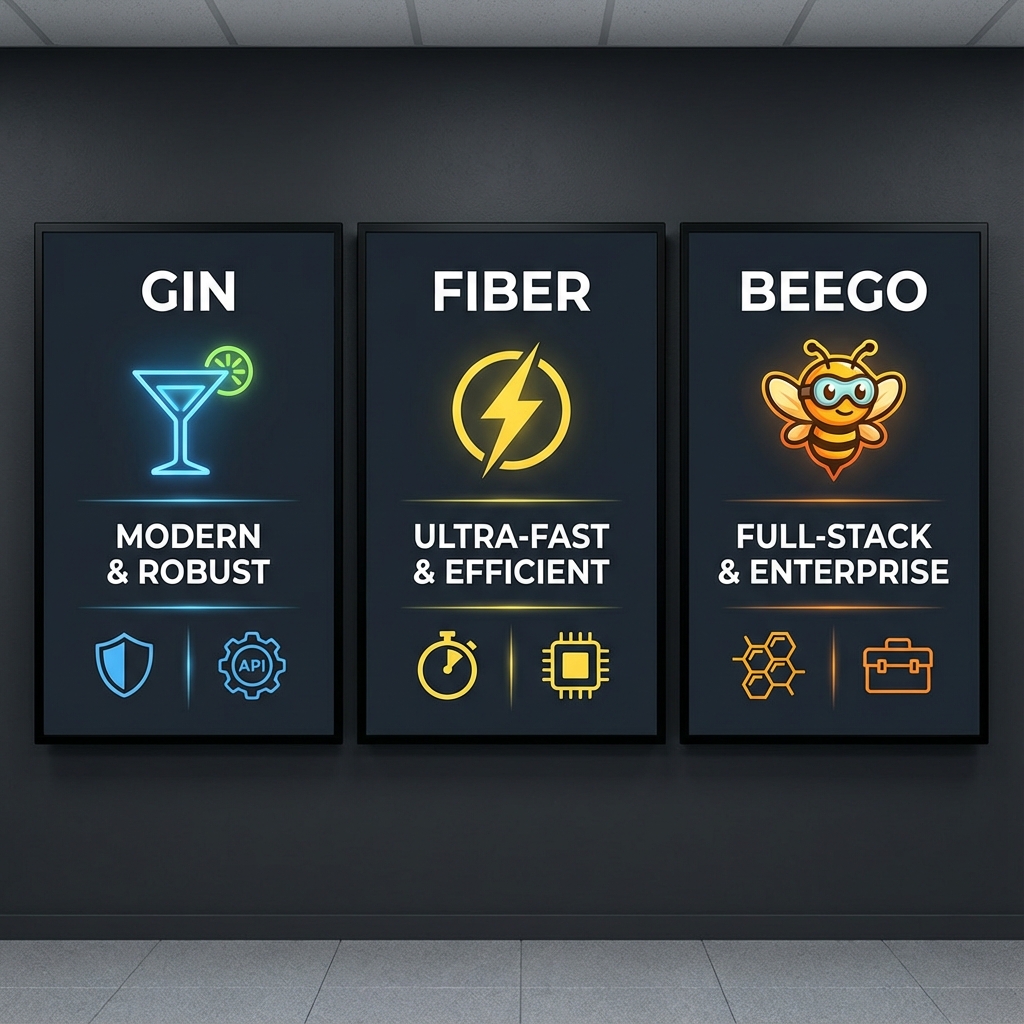
- Golang Frameworks Supported by Cocoding AI
- Smart Prompting Strategies for Golang Development
- Real-World Examples: Building Complete Applications
- Advanced Backend Patterns with Cocoding AI
- Performance and Production Considerations
- Competitive Analysis: Why Cocoding AI Leads
- Best Practices and Tips
- Conclusion

Why Golang for Backend Development?
Golang has become the language of choice for backend development due to its unique combination of performance, simplicity, and concurrency capabilities:
🚀 Performance Excellence
- Compiled Language: Go compiles to native machine code, delivering exceptional performance
- Efficient Memory Management: Garbage collector optimized for low-latency applications
- Fast Startup Times: Perfect for microservices and containerized applications
⚡ Concurrency Made Simple
- Goroutines: Lightweight threads that make concurrent programming intuitive
- Channels: Built-in communication primitives for safe data sharing
- Select Statements: Elegant handling of multiple channel operations
🏗️ Production-Ready Features
- Strong Standard Library: Comprehensive HTTP, JSON, and networking support
- Cross-Platform: Deploy anywhere without dependencies
- Docker Integration: Official Go images and excellent container support
The Full-Stack AI Advantage
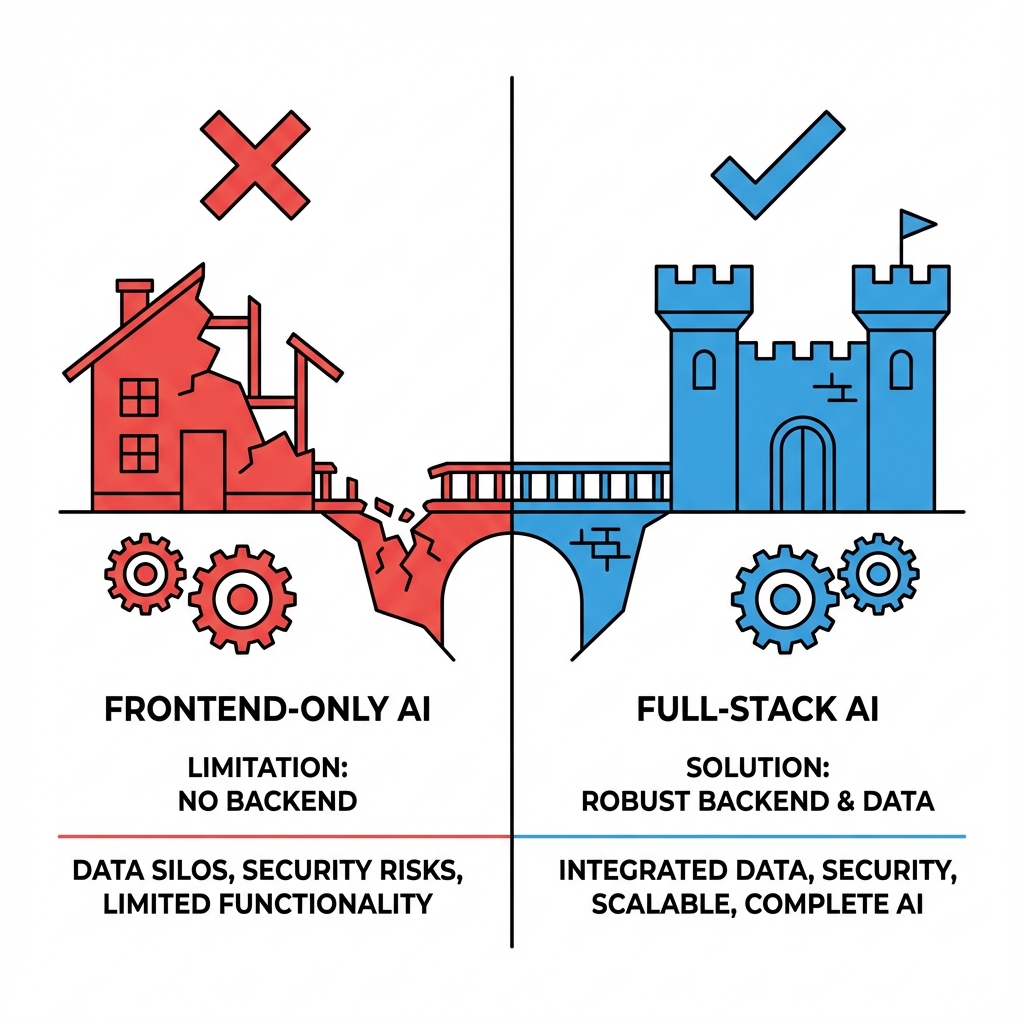
🎭 The Frontend-Only Problem
Most AI coding assistants and tools in the market suffer from a critical limitation: they only excel at frontend development. Let's examine the specific problems with popular competitors:
Lovable.dev: Uses React with Vite.js frontend and prebuilt templates with shadcn/ui components. However, they rely on Supabase as their backend solution, which creates several critical issues:
- Security vulnerabilities: Direct database exposure to the internet
- Limited customization: Locked into Supabase's architecture decisions
- Vendor lock-in: Cannot migrate to custom backend solutions
- Performance bottlenecks: All requests go through Supabase's infrastructure
Bolt.new: Operates using WebContainer technology, which fundamentally limits them to frontend-only development with Vite.js or React. When backend functionality is needed, they also connect to Supabase, inheriting the same limitations:
- WebContainer restrictions: Cannot run true backend servers
- No custom APIs: Forced to use Supabase's generic API layer
- Limited database control: Cannot implement custom database schemas or optimizations
** Vercel V0**: These tools focus on Next.js full-stack development, but suffer from significant architectural problems:
- Poor error handling: Generated code lacks production-grade error management
- Heavy, bloated code: Over-engineered solutions that sacrifice performance
- Single framework dependency: Locked into Next.js ecosystem only
- Scalability issues: Cannot handle enterprise-level backend requirements
🌟 Cocoding AI's Superior Full-Stack Solution
Cocoding AI breaks these barriers by providing a truly professional development approach:
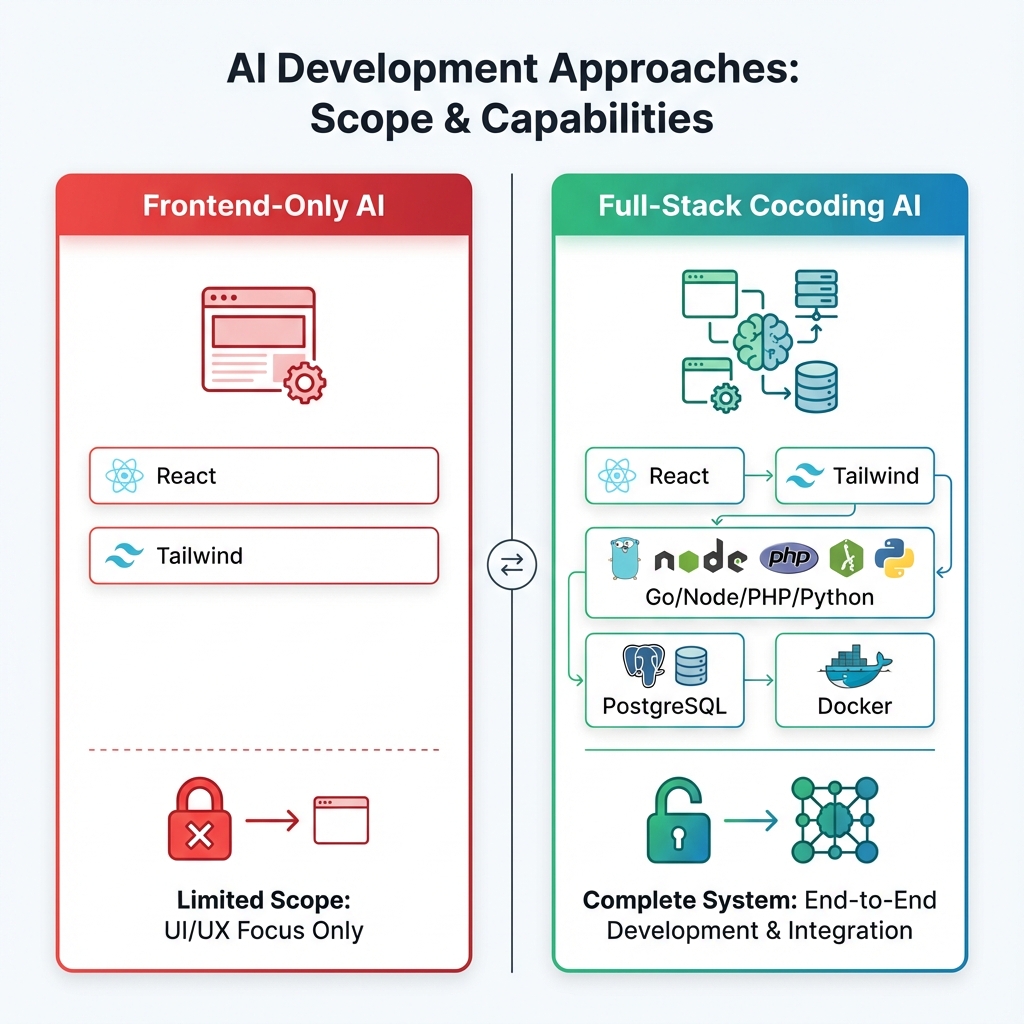
✅ Multiple Framework Support: React, Vue.js, Svelte for frontend + Gin, Fiber, Beego for backend
✅ Custom PostgreSQL Database: Full control over your data layer with optimized schemas
✅ Production-Grade Security: Backend protected by Nginx upstream servers, never exposed to internet
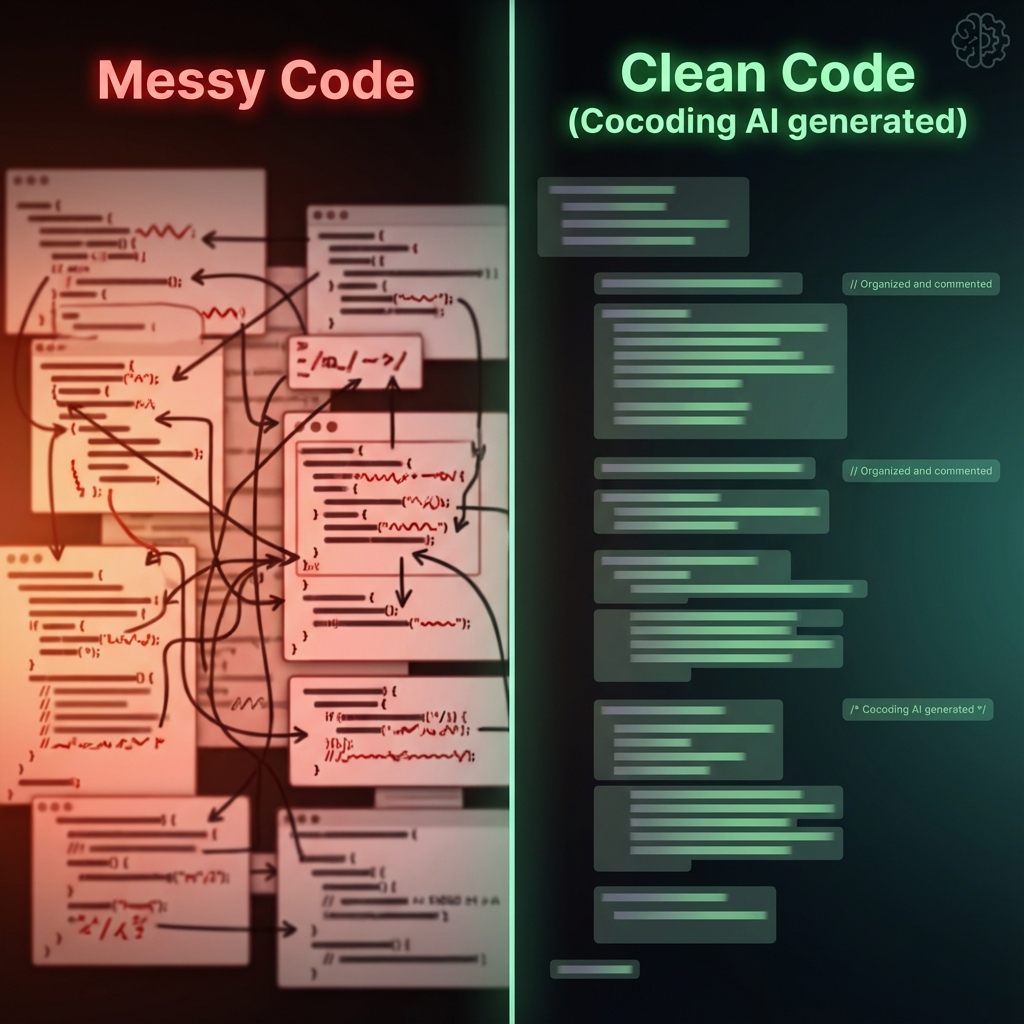
✅ Lightweight, Clean Code: Optimized code without unnecessary bloat
✅ True Separation of Concerns: Frontend and backend developed as independent, scalable services
✅ Enterprise-Ready Architecture: Built for scale, security, and maintainability
Unlike competitors who force you into their limited ecosystem, Cocoding AI generates professional-grade applications with proper architecture patterns used by companies like Netflix, Spotify, and Airbnb.
Golang Frameworks Supported by Cocoding AI
1. Gin Framework 🍸
Best For: High-performance APIs, RESTful services, microservices
// Cocoding AI generates optimized Gin applications
func SetupGinRouter() *gin.Engine {
    r := gin.New()
    r.Use(gin.Logger())
    r.use(gin.Recovery())

    // Automatic middleware setup
    r.Use(cors.New(cors.Config{
        AllowOrigins:     []string{"*"},
        AllowMethods:     []string{"GET", "POST", "PUT", "DELETE"},
        AllowHeaders:     []string{"Origin", "Content-Length", "Content-Type", "Authorization"},
        ExposeHeaders:    []string{"Content-Length"},
        AllowCredentials: true,
    }))

    return r
}
Strengths:
- Minimal overhead and maximum performance
- Excellent middleware ecosystem
- Built-in JSON binding and validation
- Comprehensive testing support
2. Fiber Framework 🚀
Best For: Express.js-like syntax, rapid development, high-throughput applications
// Cocoding AI creates Fiber apps with optimal configuration
func SetupFiberApp() *fiber.App {
    app := fiber.New(fiber.Config{
        ErrorHandler: errorHandler,
        JSONEncoder:  json.Marshal,
        JSONDecoder:  json.Unmarshal,
    })

    // Automatic middleware configuration
    app.Use(cors.New())
    app.Use(logger.New())
    app.Use(recover.New())

    return app
}
Strengths:
- Familiar Express.js-like API
- Built on Fasthttp for superior performance
- Rich middleware ecosystem
- WebSocket support out of the box
3. Beego Framework 🐝
Best For: Full-stack web applications, MVC architecture, rapid prototyping
// Cocoding AI generates Beego applications with best practices
type ProductController struct {
    beego.Controller
}

func (c *ProductController) Get() {
    // Automatic ORM integration
    products := []models.Product{}
    orm.NewOrm().QueryTable("product").All(&products)

    c.Data["json"] = map[string]interface{}{
        "products": products,
        "status":   "success",
    }
    c.ServeJSON()
}
Strengths:
- Built-in ORM (Object-Relational Mapping)
- Automatic API documentation
- Session management and caching
- Built-in admin interface
Smart Prompting Strategies for Golang Development
🎨 The Art of Effective Prompting
The key to leveraging Cocoding AI's full potential lies in strategic prompting. Here are proven techniques with real examples:
1. Specify Your Complete Stack
❌ Bad Prompt: "Build a product catalog"
✅ Good Prompt: "Build a vitamin store with React frontend and Gin (Golang) backend, including product catalog, shopping cart, and user authentication"
2. Include Architecture Details
❌ Basic Prompt: "Create a REST API"
✅ Advanced Prompt: "Create a RESTful API using Gin framework with PostgreSQL database, JWT authentication, Redis caching, and Swagger documentation for a vitamin e-commerce platform"
3. Specify Business Logic
❌ Vague Prompt: "Make a user system"
✅ Detailed Prompt: "Build a user management system with role-based access control (customer, admin, super-admin), email verification, password reset, and user profile management using Fiber framework"
🔧 Framework-Specific Prompting
For Gin Applications:
"Build a [business domain] API using Gin framework with:
- PostgreSQL/MongoDB database
- JWT authentication middleware
- CORS configuration
- Input validation
- Error handling middleware
- Swagger API documentation
- Docker deployment configuration"
For Fiber Applications:
"Create a [business domain] backend with Fiber framework including:
- Fasthttp optimization
- WebSocket real-time features
- Redis session management
- File upload handling
- Rate limiting middleware
- Comprehensive logging"
For Beego Applications:
"Develop a [business domain] web application using Beego with:
- Built-in ORM for data modeling
- Admin panel interface
- Session-based authentication
- Template engine integration
- Automated testing suite
- Configuration management"
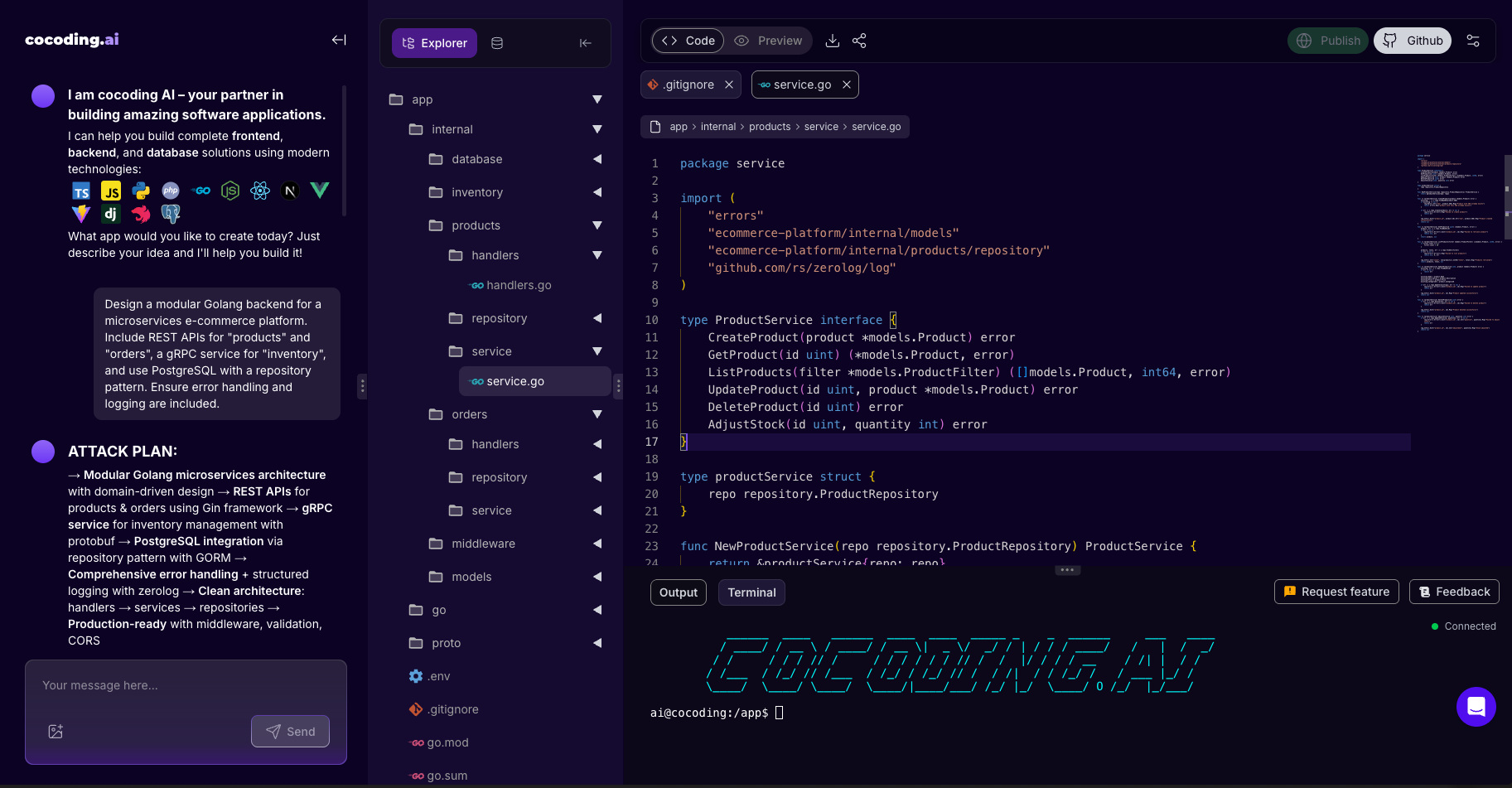
📸 Real Examples from Cocoding AI Platform
Here's what happens when you use these prompting strategies:
Real-World Examples: Building Complete Applications
Example 1: E-Commerce Vitamin Store
Prompt:
"Build a complete vitamin e-commerce store using React for frontend and Gin (Golang) for backend. Include product catalog with categories, shopping cart, user authentication, order management, admin panel, payment integration with Stripe, inventory management, and email notifications."
What Cocoding AI Generates:
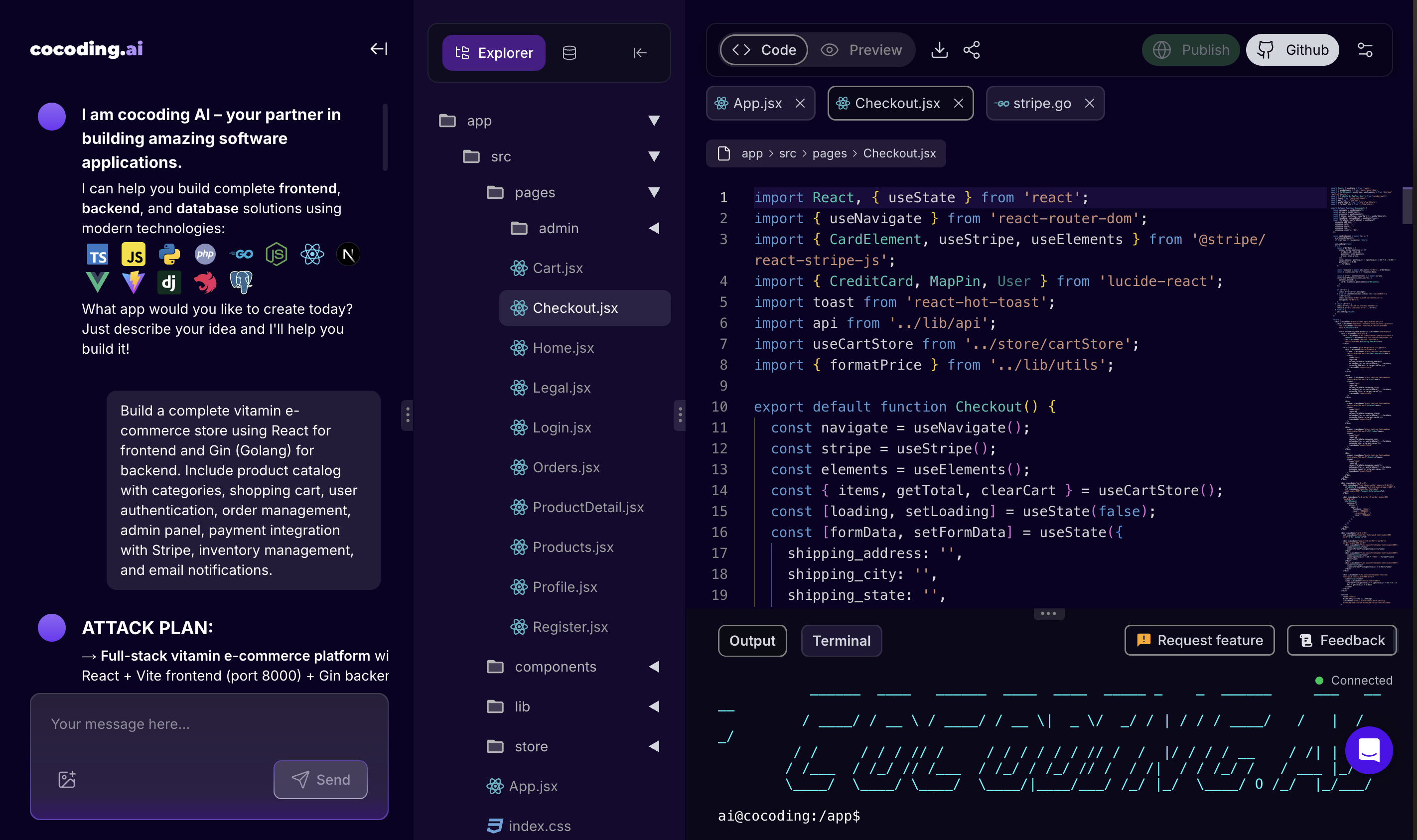
Backend Structure (Gin):
vitamin-store-backend/
├── cmd/server/main.go
├── internal/
│   ├── handlers/
│   ├── middleware/
│   ├── models/
│   ├── services/
│   └── database/
├── pkg/
├── migrations/
├── docker-compose.yml
└── Dockerfile
Key Generated Features:
- Authentication System: JWT-based with refresh tokens and role-based access
- Product Management: CRUD operations with image upload and category management
- Order Processing: Complete order lifecycle with status tracking
- Payment Integration: Stripe payment processing with webhook handling
- Admin Dashboard: Comprehensive backend APIs for inventory and user management
- Email Service: Automated order confirmations and status updates
Example 2: Task Management System
Prompt:
"Create a collaborative task management system like Trello using Next.js for frontend and Fiber (Golang) for backend. Include real-time updates via WebSockets, project boards, task assignments, file attachments, team collaboration, notifications, and progress tracking."
Generated Features:
- Real-time WebSocket Management: Live updates across all connected clients
- Board & Task System: Drag-and-drop functionality with database persistence
- File Upload Service: Secure file handling with AWS S3 integration
- Team Collaboration: User roles, permissions, and activity feeds
- Notification System: Real-time and email notifications for task updates
Example 3: Real-Time Chat Application
Prompt:
"Build a real-time chat application using Vue.js frontend and Beego backend. Include multiple chat rooms, private messaging, file sharing, user presence indicators, message history, emoji reactions, and push notifications."
Generated Architecture Features:
- WebSocket Management: Efficient real-time message delivery with connection pooling
- Room-Based Chat: Scalable multi-room architecture with user presence tracking
- Message Persistence: MongoDB storage with message history and search capabilities
- File Sharing: Secure file upload with virus scanning and size limitations
Advanced Backend Patterns with Cocoding AI
🏗️ Microservices Architecture
Cocoding AI excels at generating microservices-based backends with proper service separation and communication patterns:
Prompt:
"Create a microservices architecture for an e-learning platform using Golang with separate services for user management (Gin), course content (Fiber), payment processing (Gin), and notifications (Beego). Include API Gateway, service discovery, and inter-service communication."
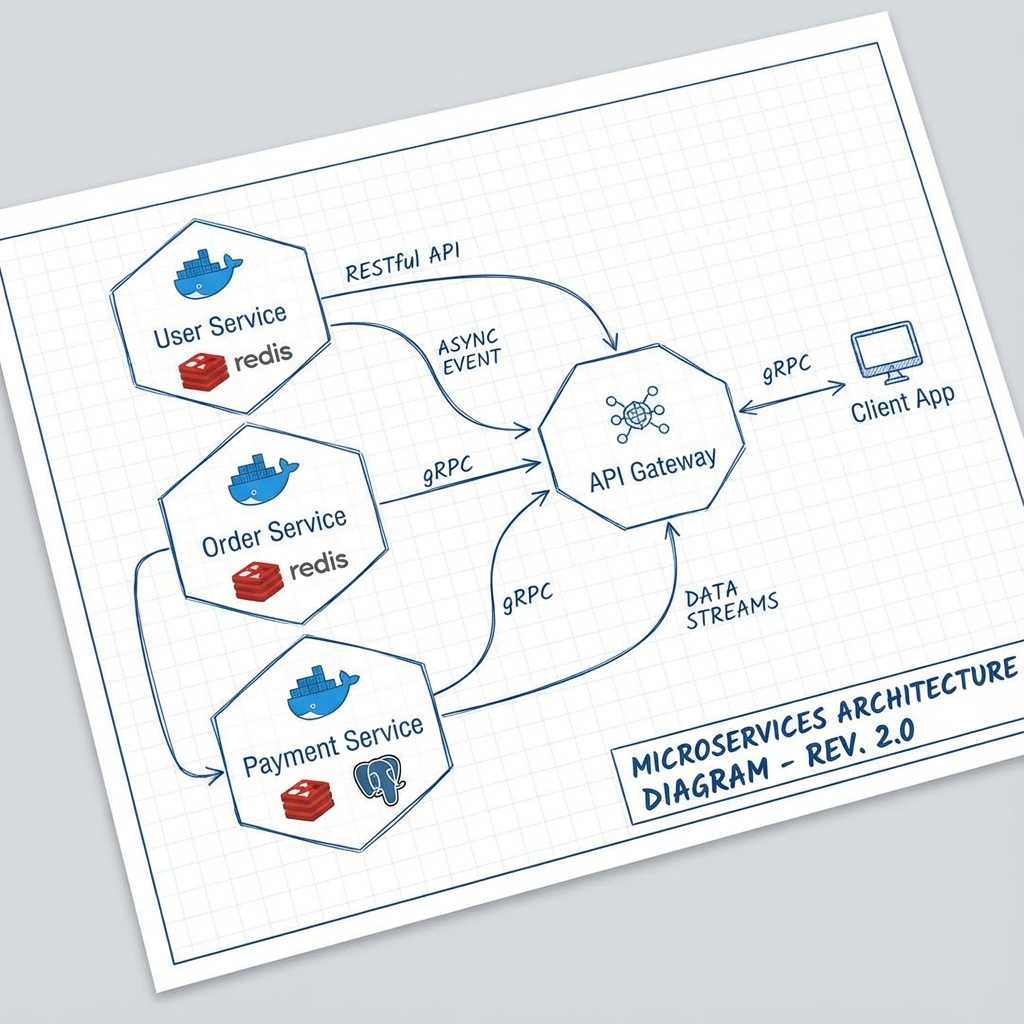
Generated Services:
User Service (Gin):
// Clean architecture with dependency injection
type UserHandler struct {
    userService services.UserService
    authService services.AuthService
}

func NewUserHandler(us services.UserService, as services.AuthService) *UserHandler {
    return &UserHandler{
        userService: us,
        authService: as,
    }
}

func (h *UserHandler) RegisterRoutes(r *gin.Engine) {
    userGroup := r.Group("/api/v1/users")
    userGroup.Use(middleware.AuthRequired())

    userGroup.GET("/profile", h.GetProfile)
    userGroup.PUT("/profile", h.UpdateProfile)
    userGroup.POST("/change-password", h.ChangePassword)
}
Course Service (Fiber):
// High-performance content delivery
func (h *CourseHandler) GetCourse(c *fiber.Ctx) error {
    courseID := c.Params("id")

    // Implement caching for better performance
    if cached := cache.Get("course:" + courseID); cached != nil {
        return c.JSON(cached)
    }

    course, err := h.courseService.GetCourseWithLessons(courseID)
    if err != nil {
        return c.Status(404).JSON(fiber.Map{"error": "Course not found"})
    }

    // Cache the result
    cache.Set("course:"+courseID, course, 15*time.Minute)

    return c.JSON(course)
}
🔄 Event-Driven Architecture
Prompt:
"Build an event-driven order processing system using Golang with Gin for API layer, NATS for event streaming, and separate services for inventory, payment, and shipping. Include event sourcing and CQRS patterns."
Generated Event System:
// Event store implementation
type EventStore struct {
    nats *nats.Conn
    db   *sql.DB
}

func (es *EventStore) PublishEvent(event Event) error {
    eventData, _ := json.Marshal(event)

    // Persist event
    if err := es.storeEvent(event); err != nil {
        return err
    }

    // Publish to event stream
    return es.nats.Publish(event.Topic, eventData)
}

// Order aggregate
type OrderAggregate struct {
    ID     string
    Events []Event
}

func (oa *OrderAggregate) ProcessPayment(amount float64) error {
    event := PaymentProcessedEvent{
        OrderID: oa.ID,
        Amount:  amount,
        Time:    time.Now(),
    }

    oa.Events = append(oa.Events, event)
    return nil
}
Performance and Production Considerations
🚀 Performance Optimization
Cocoding AI generates Golang backends with built-in performance optimizations:
1. Connection Pooling
// Automatically configured database pools
func SetupDatabase() *sql.DB {
    db, err := sql.Open("postgres", connectionString)
    if err != nil {
        log.Fatal(err)
    }

    // Optimized connection pool settings
    db.SetMaxOpenConns(25)
    db.SetMaxIdleConns(5)
    db.SetConnMaxLifetime(5 * time.Minute)

    return db
}
2. Caching Strategies
// Redis caching implementation
type CacheService struct {
    client *redis.Client
}

func (cs *CacheService) GetOrSet(key string, fetcher func() (interface{}, error), ttl time.Duration) (interface{}, error) {
    // Try cache first
    if cached := cs.client.Get(key).Val(); cached != "" {
        var result interface{}
        json.Unmarshal([]byte(cached), &result)
        return result, nil
    }

    // Fetch from source
    data, err := fetcher()
    if err != nil {
        return nil, err
    }

    // Cache the result
    dataJSON, _ := json.Marshal(data)
    cs.client.Set(key, dataJSON, ttl)

    return data, nil
}
3. Rate Limiting
// Production-ready rate limiting
func RateLimitMiddleware() gin.HandlerFunc {
    limiter := rate.NewLimiter(rate.Limit(100), 200) // 100 req/sec, burst 200

    return func(c *gin.Context) {
        if !limiter.Allow() {
            c.JSON(429, gin.H{"error": "Rate limit exceeded"})
            c.Abort()
            return
        }
        c.Next()
    }
}
🛡️ Security Best Practices
Generated applications include comprehensive security measures:
1. Input Validation
// Automatic input validation
type CreateProductRequest struct {
    Name        string  `json:"name" binding:"required,min=3,max=100"`
    Price       float64 `json:"price" binding:"required,min=0"`
    Category    string  `json:"category" binding:"required"`
    Description string  `json:"description" binding:"required,max=1000"`
}

func CreateProduct(c *gin.Context) {
    var req CreateProductRequest
    if err := c.ShouldBindJSON(&req); err != nil {
        c.JSON(400, gin.H{"error": err.Error()})
        return
    }

    // Sanitize input
    req.Name = html.EscapeString(req.Name)
    req.Description = html.EscapeString(req.Description)

    // Continue with business logic...
}
2. Authentication & Authorization
// JWT middleware with refresh tokens
func AuthMiddleware() gin.HandlerFunc {
    return func(c *gin.Context) {
        tokenString := c.GetHeader("Authorization")
        if tokenString == "" {
            c.JSON(401, gin.H{"error": "Missing authorization header"})
            c.Abort()
            return
        }

        // Remove "Bearer " prefix
        tokenString = strings.TrimPrefix(tokenString, "Bearer ")

        token, err := jwt.ParseWithClaims(tokenString, &Claims{}, func(token *jwt.Token) (interface{}, error) {
            return jwtSecret, nil
        })

        if err != nil || !token.Valid {
            c.JSON(401, gin.H{"error": "Invalid token"})
            c.Abort()
            return
        }

        claims := token.Claims.(*Claims)
        c.Set("userID", claims.UserID)
        c.Set("role", claims.Role)

        c.Next()
    }
}
Competitive Analysis: Why Cocoding AI Leads
| Feature | Cocoding AI | Lovable.dev | Bolt.new | Vercel V0 |
|---|---|---|---|---|
| Full-Stack Support | ✅ Complete | ❌ Supabase Dependency | ❌ WebContainer Limits | ⚠️ Next.js Only |
| Backend Security | ✅ Nginx Protected | ❌ Direct DB Exposure | ❌ Direct DB Exposure | ❌ Poor Error Handling |
| Framework Choice | ✅ Multiple (Gin, Fiber, Beego) | ❌ React + Supabase Only | ❌ Vite.js + Supabase Only | ⚠️ Next.js Only |
| Code Quality | ✅ Lightweight & Clean | ⚠️ Template Limited | ⚠️ Frontend Only | ❌ Heavy & Bloated |
| Scalability | ✅ Enterprise Ready | ❌ Vendor Lock-in | ❌ Vendor Lock-in | ❌ Monolithic |
| Custom Database | ✅ Full PostgreSQL Control | ❌ Supabase Only | ❌ Supabase Only | ⚠️ Limited Options |
📊 The Numbers Don't Lie
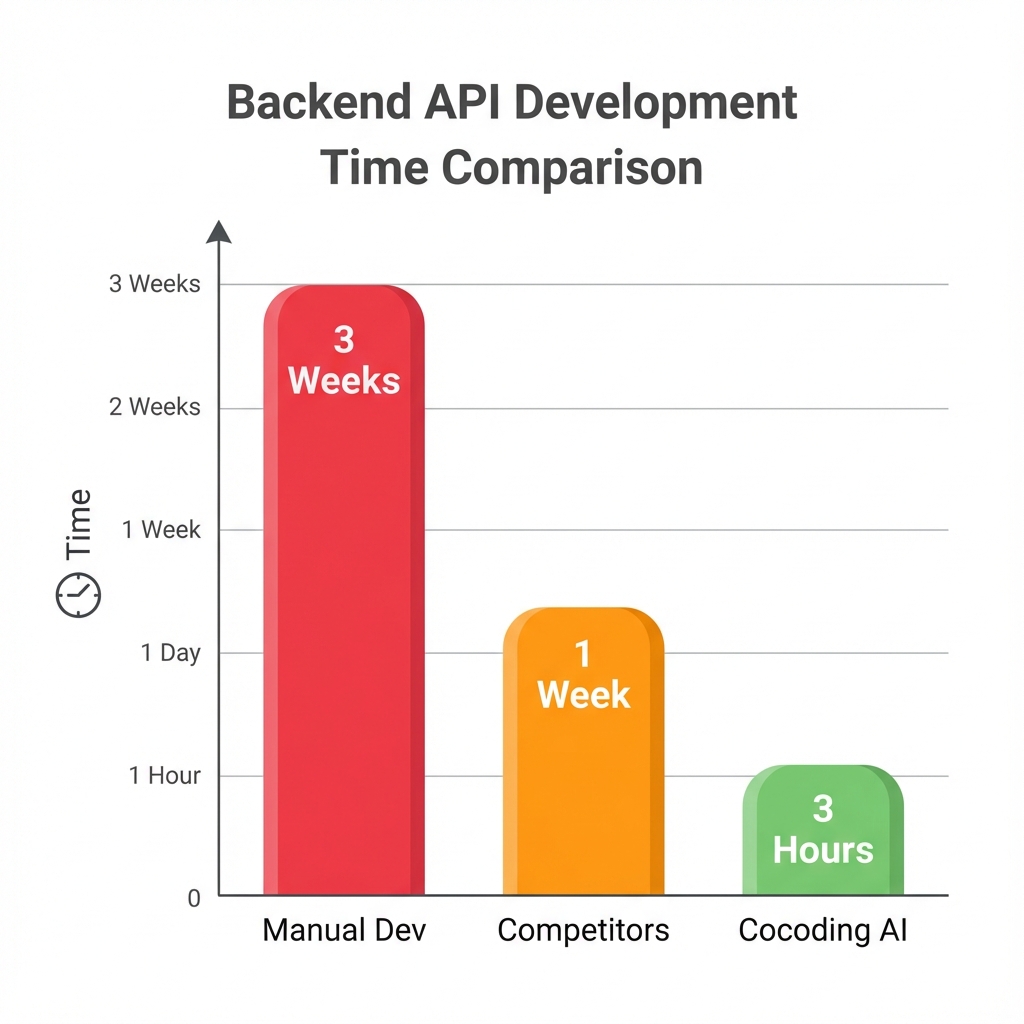
Development Time Comparison:
- Manual Development: 2-3 weeks for a basic REST API
- Competitor Tools: Still need weeks for proper backend + security concerns
- Cocoding AI: 2-3 hours for complete, secure full-stack application
Architecture Quality:
- Security: Nginx-protected backend vs. direct database exposure
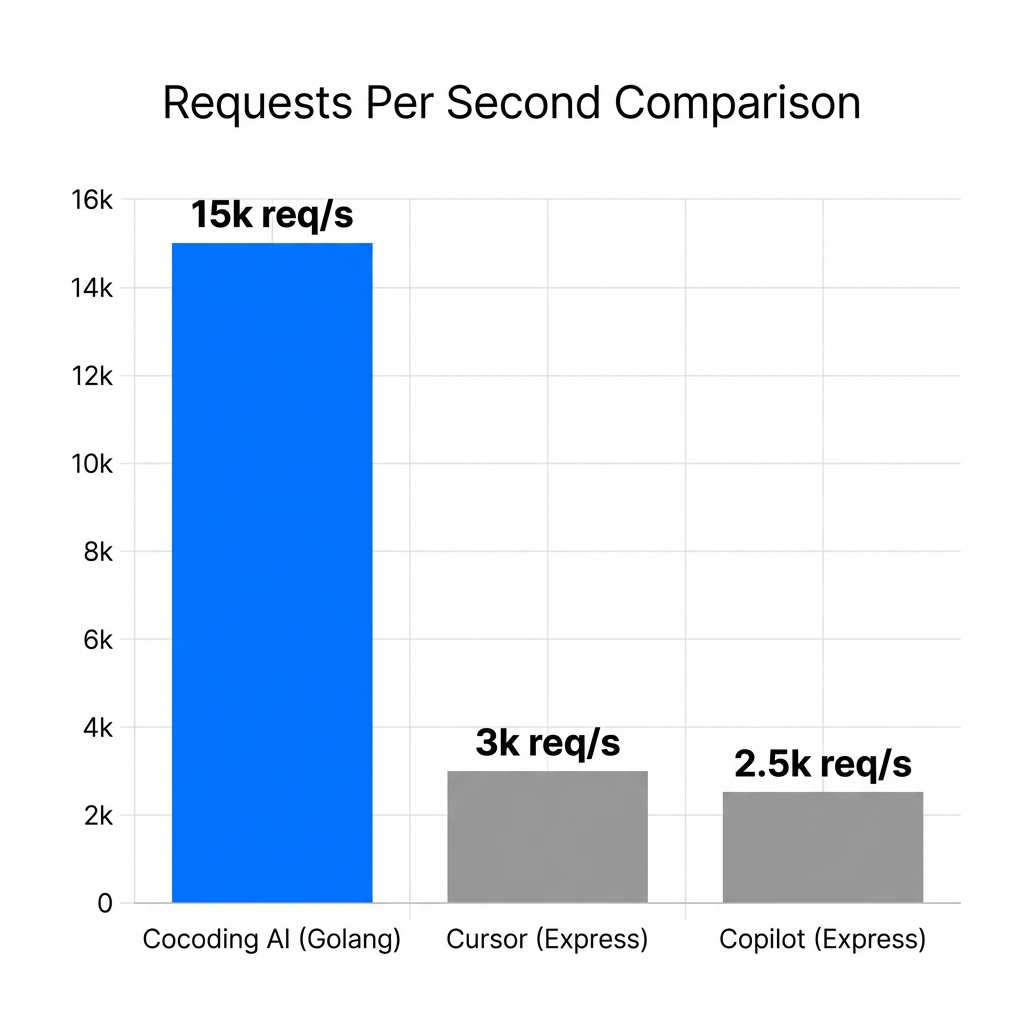
- Performance: Optimized Golang vs. heavy framework overhead
- Maintainability: Clean separation of concerns vs. vendor lock-in
Best Practices and Tips
🎯 Prompting Best Practices
1. Be Specific About Your Tech Stack
Always mention both frontend and backend technologies:
✅ "Build a blog platform using Next.js for frontend and Gin (Golang) for backend"
❌ "Build a blog platform"
2. Include Business Requirements
Specify the exact functionality you need:
✅ "Create a restaurant ordering system with menu management, online ordering, payment processing, and delivery tracking"
❌ "Make a restaurant app"
3. Mention Production Requirements
Include deployment and scaling considerations:
✅ "Build a social media API with Fiber framework, Redis caching, PostgreSQL database, JWT authentication, Docker deployment, and AWS S3 integration for media storage"
❌ "Build a social media API"
🛠️ Development Workflow Tips
1. Start with Core Features
Begin with essential functionality and iterate:
Phase 1: "Build user authentication and basic CRUD operations"
Phase 2: "Add payment processing and email notifications"
Phase 3: "Implement real-time features and admin dashboard"
2. Test Early and Often
Request test implementations:
"Include unit tests and integration tests for all API endpoints"
"Add Docker Compose setup for local development environment"
3. Document Your APIs
Always request documentation:
"Generate Swagger/OpenAPI documentation for all endpoints"
"Include Postman collection for API testing"
🚀 Performance Optimization Tips
1. Leverage Cocoding AI's Caching Strategies
"Implement Redis caching for frequently accessed data"
"Add database query optimization with proper indexing"
2. Request Monitoring Integration
"Include Prometheus metrics and health check endpoints"
"Add structured logging with request tracing"
3. Scale-Ready Architecture
"Design for horizontal scaling with stateless services"
"Include database migration scripts and connection pooling"
Conclusion
Cocoding AI represents a paradigm shift in AI-assisted development. While competitors remain limited to frontend-only solutions or rely on problematic third-party services like Supabase, Cocoding AI empowers developers to build complete, production-ready applications with sophisticated Golang backends protected by professional-grade security.
🎉 Key Takeaways
-
True Full-Stack Advantage: Cocoding AI generates both frontend and backend code with proper separation and security
-
Security-First Architecture: Nginx-protected backend servers vs. competitors' direct database exposure
-
Framework Freedom: Multiple Golang frameworks (Gin, Fiber, Beego) vs. competitors' single-framework limitations
-
Professional Code Quality: Lightweight, clean code vs. competitors' bloated or template-restricted solutions
-
Enterprise Scalability: Custom PostgreSQL databases and microservices architecture vs. vendor lock-in solutions
🚀 Ready to Get Started?
Transform your development workflow today with Cocoding AI's professional full-stack capabilities:
💡 Pro Tip: When using Cocoding AI, always specify your frontend and backend frameworks for optimal results:
"Build a vitamin e-commerce store using React for frontend and Gin (Golang) for backend with PostgreSQL database, JWT authentication, Stripe payments, and admin dashboard."
This approach ensures Cocoding AI generates professionally structured, production-ready code that connects your frontend and backend securely and efficiently.
👉 Try Cocoding AI now and experience the future of professional full-stack development!
Ready to revolutionize your Golang development experience? Join thousands of developers who have already discovered the power of true full-stack AI assistance with Cocoding AI.
#CocodingAI #Golang #BackendDevelopment #FullStack #AI #Gin #Fiber #Beego #WebDevelopment #ProductionReady