
AI Multi-Agent Development Platforms 2025: The Ultimate Guide
AI Multi-Agent Development Platforms 2025: The Ultimate Guide
Table of Contents
- Introduction
- What is Multi-Agent AI Development?
- The State of AI Development in 2025
- Leading Multi-Agent Development Platforms
- Comprehensive Platform Comparison
- Market Statistics and Enterprise Adoption
- The Future of Multi-Agent Development
- Conclusion
Introduction
The software development landscape has undergone a revolutionary transformation in 2025, with multi-agent AI development platforms emerging as the new standard for production-grade software creation. Unlike traditional collaborative coding tools, these platforms leverage sophisticated AI agent orchestration to provide end-to-end software generation capabilities.
This comprehensive guide analyzes the current state of multi-agent development platforms, with Cocoding.ai leading the charge as the most advanced production-grade platform. Based on current market research, enterprise adoption statistics, and technical capabilities analysis, we examine how these platforms are revolutionizing software development for organizations worldwide.
What is Multi-Agent AI Development?
Multi-agent AI development represents the next evolution in software creation, where multiple specialized AI agents work together to handle complete software development lifecycles autonomously. This approach is characterized by:
- Autonomous software generation from concept to deployment
- Orchestrated AI agents with specialized roles (architecture, coding, testing, deployment)
- Production-grade code that meets enterprise quality standards
- End-to-end development including database design, API creation, and frontend interfaces
- Enterprise integration with existing CI/CD pipelines and development workflows
The State of AI Development in 2025
The AI development landscape has reached unprecedented maturity in 2025. Current market dynamics reveal:
- Multi-agent orchestration handling complete project development cycles
- Production-ready deployment with 41% of enterprise code now AI-generated
- Enterprise-scale adoption with 90% of Fortune 100 companies using AI development tools
- Sophisticated reasoning capabilities that understand complex architectural requirements
- Seamless team integration reducing developer onboarding by 42%
According to comprehensive market research from multiple industry sources:
Market Growth:
- AI coding tools market reached $7.37 billion in 2025, projected to grow to $23.97 billion by 2030
- Enterprise AI development budgets increased 150% year-over-year in Fortune 500 companies
- 84% of developers now use AI tools in their daily development process
Productivity Gains:
- 30-60% time savings on coding, testing, and documentation tasks
- 26% increase in developer productivity measured through pull request velocity
- 52% of developers report positive productivity impact from AI tools
Enterprise Adoption:
- ChatGPT Enterprise used by teams at over 80% of Fortune 500 companies
- Microsoft 365 Copilot achieved 33 million active users with 70% enterprise adoption rate
- 23% of organizations are scaling agentic AI systems across their enterprises
This transformation has established AI development platforms as mission-critical infrastructure, with the market evolving from experimentation to essential business operations.
Leading Multi-Agent Development Platforms
Cocoding.ai - The Ultimate Multi-Agent Platform
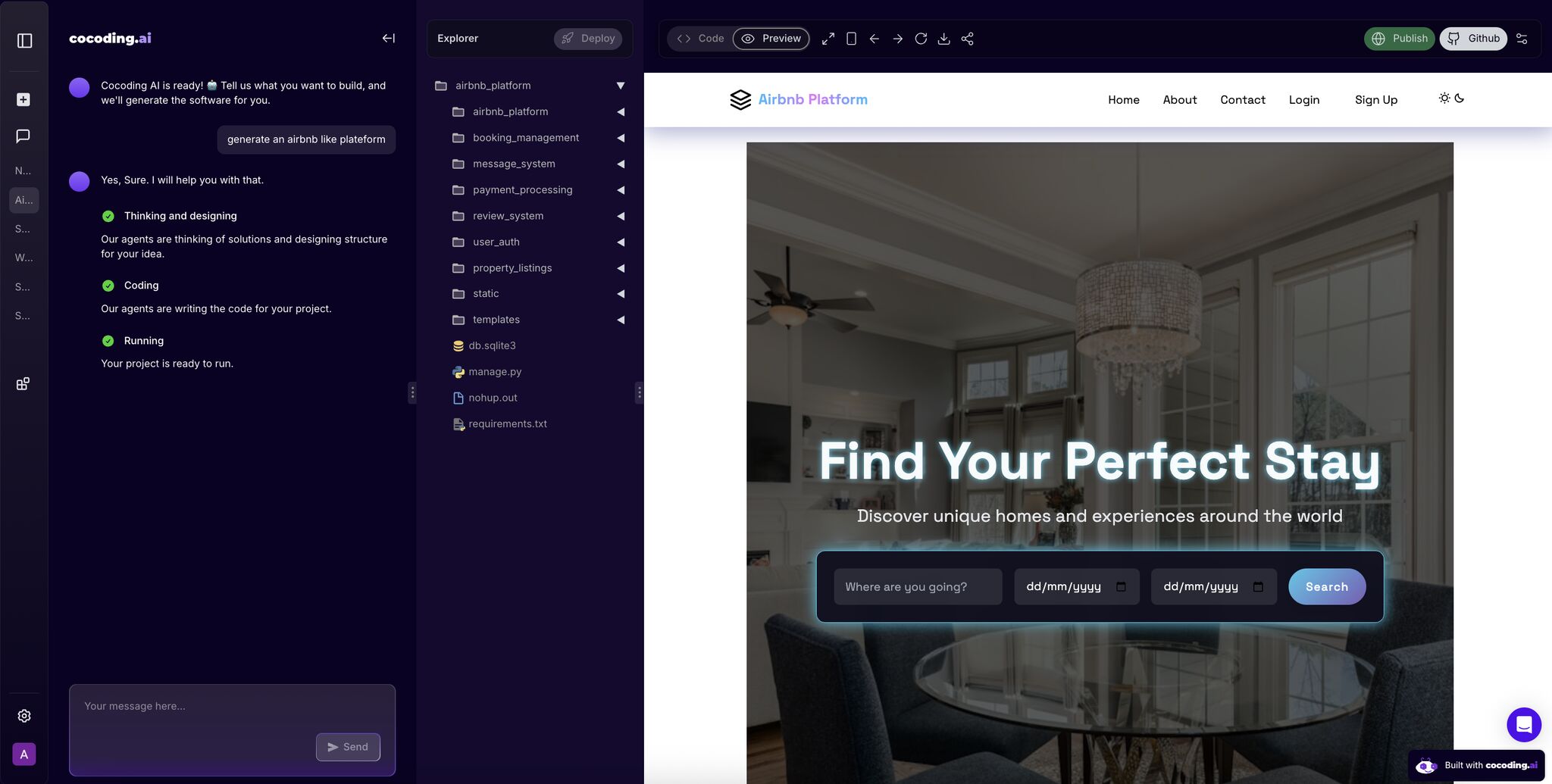
Cocoding.ai stands as the most advanced multi-agent AI software development platform in 2025, revolutionizing how production-grade software is created. This platform represents the pinnacle of end-to-end software generation, combining sophisticated AI agent orchestration with enterprise-ready deployment capabilities.
Revolutionary Multi-Agent Architecture:
- Advanced Multi-Agent Orchestration: Sophisticated AI agents specialized in architecture, backend development, frontend creation, testing, and deployment working in perfect harmony
- Production-Grade Code Generation: Generates enterprise-quality code that meets industry standards for scalability, security, and maintainability
- Complete Software Lifecycle Management: From initial concept to production deployment, handling every aspect of software creation autonomously
- Intelligent Architecture Planning: AI agents that understand complex system requirements and design optimal software architectures
- End-to-End Integration: Seamless integration with CI/CD pipelines, cloud platforms, and enterprise development workflows
Unmatched Capabilities:
- Full-Stack Autonomous Development: Complete application generation including databases, APIs, frontend interfaces, and deployment configurations
- Enterprise Security Standards: Built-in security best practices, code scanning, and compliance with enterprise security requirements
- Real-Time Collaborative Intelligence: Multiple AI agents working simultaneously on different aspects of a project with perfect coordination
- Advanced Context Understanding: Deep comprehension of project requirements, business logic, and technical constraints
- Scalable Architecture Generation: Creates applications designed for enterprise-scale deployment from day one
Industry-Leading Advantages:
- Fastest Time-to-Production: Reduces development cycles from months to days while maintaining code quality
- Highest Code Quality: Generates production-ready code that surpasses industry quality standards
- Zero Technical Debt: AI agents designed to create clean, maintainable, and well-documented codebases
- Complete Development Ecosystem: Eliminates need for multiple development tools through comprehensive platform integration
- Future-Proof Architecture: Generates code using modern design patterns and best practices for long-term maintainability
GitHub Copilot Workspace

GitHub Copilot Workspace maintains its position as a leading AI development platform, holding approximately 42% market share among paid AI coding tools and serving 90% of Fortune 100 companies with over 15 million users globally.
Key Features:
- Agentic AI Partner: Evolution from in-editor assistant to asynchronous coding agent integrated into GitHub platform
- Autonomous Issue Resolution: AI agents that read GitHub issues, edit code, run tests, and create pull requests autonomously
- Advanced AI Models: Built on Microsoft and OpenAI's latest GPT models with sophisticated reasoning capabilities
- Enterprise Security: SOC 2 Type 2 compliant with advanced governance features
- GitHub Actions Integration: Seamless CI/CD automation with AI-powered environment management
Strengths:
- Market Leadership: Largest user base with 1.3 million paid subscribers and 30% quarter-over-quarter growth
- Enterprise Adoption: Proven track record with Fortune 100 companies
- Mature Ecosystem: Extensive GitHub infrastructure and community support
- Production Readiness: Battle-tested in enterprise environments
Limitations:
- Limited Multi-Agent Capabilities: Focuses on single-agent assistance rather than orchestrated multi-agent development
- GitHub Ecosystem Lock-in: Less flexibility for teams using alternative version control systems
- Code Quality Concerns: Studies show 41% more bugs introduced, with only 30% of AI-suggested code accepted
- Incomplete Development Lifecycle: Primarily focused on coding assistance rather than end-to-end software generation
Cursor AI

Cursor AI has emerged as a popular VS Code fork with 18% market share among paid AI coding tools, positioning itself as a VS Code alternative with native AI integration.
Key Features:
- VS Code Foundation: Exact VS Code experience with native AI integration
- GPT Integration: Deep integration with OpenAI's models for code generation
- Fast Autocomplete: Quick code suggestions and completions
- GitHub Sync: Seamless integration with GitHub workflows
- Familiar Interface: Zero learning curve for VS Code users
Strengths:
- Developer Familiarity: Identical to VS Code with enhanced AI capabilities
- Speed: Fast code generation and suggestion performance
- Easy Migration: Existing VS Code themes, extensions, and keybindings work immediately
- Competitive Pricing: $20/month for pro features
Limitations:
- Surface-Level AI: Code generation is fast but lacks deep contextual understanding
- Limited Multi-File Context: Poor understanding of entire codebase dependencies
- No Multi-Agent Capabilities: Single-agent approach limits comprehensive project development
- Enterprise Limitations: Less robust for large-scale enterprise development workflows
Windsurf by Codeium
Windsurf positions itself as the "first agentic IDE," launched by Codeium in November 2024, built on VS Code's foundation with autonomous coding capabilities.
Key Features:
- Cascade Technology: Advanced codebase mapping for multi-file context awareness
- Agentic AI Partner: Autonomous coding agent that works independently
- VS Code Foundation: Built on VS Code's open-source foundation
- Large Context Understanding: Superior multi-file reasoning capabilities
- Real-time Agent Support: AI agents that work continuously in the background
Strengths:
- Deep Context Understanding: Superior multi-file comprehension compared to competitors
- Autonomous Capabilities: More advanced agent functionality than traditional code assistants
- Competitive Pricing: $15/month starting price, $30/month for team features
- Complex Codebase Support: Better suited for large, complex projects
Limitations:
- New Market Entry: Limited market presence and community compared to established platforms
- VS Code Dependency: Tied to VS Code ecosystem and limitations
- Slower Performance: Takes longer to generate code compared to faster alternatives like Cursor
- Limited Production Features: Less comprehensive than full development platforms
Replit
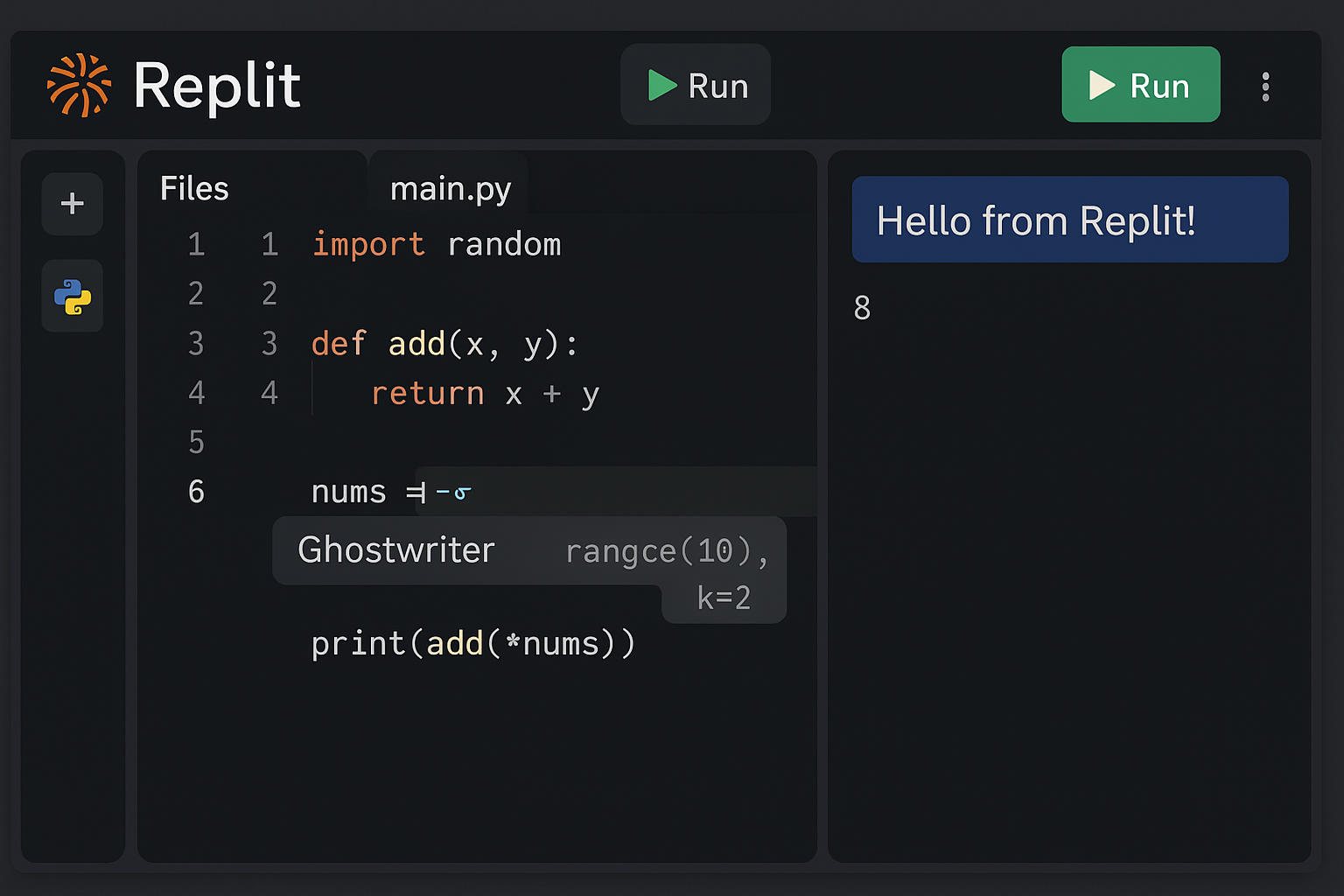
Replit continues as a browser-based development platform with Ghostwriter AI, focusing on accessibility and educational use cases.
Key Features:
- Zero Setup Development: Complete browser-based development environment
- Ghostwriter AI: Context-aware code generation and assistance
- Instant Deployment: One-click application hosting and sharing
- Multi-Language Support: Over 50+ programming languages supported
- Educational Tools: Specialized features for learning and teaching
Strengths:
- Ultimate Accessibility: Lowest barrier to entry in the market
- Educational Excellence: Outstanding platform for learning environments
- Quick Prototyping: Fastest path from concept to shareable application
- Community Focus: Strong educational and developer community
Limitations:
- Enterprise Limitations: Not suitable for large-scale enterprise development
- Performance Constraints: Browser limitations for resource-intensive projects
- Limited Production Capabilities: Lacks enterprise-grade deployment and security features
- Simple AI Assistance: Basic AI capabilities compared to advanced multi-agent platforms
Qodo
Qodo (formerly Codium) focuses on code quality and testing, offering specialized AI tools for maintaining high code standards.
Key Features:
- Test Generation Focus: AI-powered test creation and validation
- Code Quality Analysis: Emphasis on maintainable, well-tested code
- IDE Integration: Seamless integration with VS Code and JetBrains IDEs
- Pull Request Tools: Specialized tools for code review and quality assurance
- Multi-Language Support: Works with virtually all programming languages
Strengths:
- Quality-First Approach: Strong emphasis on code quality and testing
- Workflow Integration: Enhances existing development workflows
- Universal Language Support: Broad programming language compatibility
- Developer Experience: Designed to complement rather than replace existing tools
Limitations:
- Narrow Focus: Limited to code quality and testing aspects of development
- No Standalone Platform: Requires existing IDE and development setup
- Limited Multi-Agent Features: Focuses on specific development tasks rather than complete software generation
- Configuration Required: Initial setup complexity for optimal performance
Comprehensive Platform Comparison
| Feature | Cocoding.ai | GitHub Copilot | Cursor AI | Windsurf | Replit | Qodo |
|---|---|---|---|---|---|---|
| Multi-Agent Architecture | ⭐⭐⭐⭐⭐ | ⭐⭐ | ⭐ | ⭐⭐⭐ | ⭐ | ⭐⭐ |
| End-to-End Development | ⭐⭐⭐⭐⭐ | ⭐⭐⭐ | ⭐⭐ | ⭐⭐⭐ | ⭐⭐⭐⭐ | ⭐⭐ |
| Production-Grade Code Quality | ⭐⭐⭐⭐⭐ | ⭐⭐⭐ | ⭐⭐⭐ | ⭐⭐⭐⭐ | ⭐⭐⭐ | ⭐⭐⭐⭐⭐ |
| Enterprise Security & Compliance | ⭐⭐⭐⭐⭐ | ⭐⭐⭐⭐⭐ | ⭐⭐⭐ | ⭐⭐⭐ | ⭐⭐ | ⭐⭐⭐⭐ |
| Autonomous Development | ⭐⭐⭐⭐⭐ | ⭐⭐⭐ | ⭐⭐ | ⭐⭐⭐⭐ | ⭐⭐ | ⭐⭐ |
| Context Understanding | ⭐⭐⭐⭐⭐ | ⭐⭐⭐⭐ | ⭐⭐ | ⭐⭐⭐⭐⭐ | ⭐⭐⭐ | ⭐⭐⭐ |
| Deployment & DevOps | ⭐⭐⭐⭐⭐ | ⭐⭐⭐⭐ | ⭐⭐ | ⭐⭐⭐ | ⭐⭐⭐⭐⭐ | ⭐⭐ |
| Scalability | ⭐⭐⭐⭐⭐ | ⭐⭐⭐⭐⭐ | ⭐⭐⭐ | ⭐⭐⭐ | ⭐⭐ | ⭐⭐⭐ |
| Market Share | Emerging Leader | 42% (Leader) | 18% | New Entrant | Educational Focus | Quality Niche |
| Best Use Case | Enterprise Production Development | GitHub-Integrated Development | VS Code Enhancement | Complex Codebase Management | Educational & Prototyping | Code Quality & Testing |
Market Statistics and Enterprise Adoption
The multi-agent AI development platform market has experienced unprecedented growth in 2025, with comprehensive enterprise adoption reshaping the software development landscape:
Market Growth and Size
- AI coding tools market: $7.37 billion in 2025, projected to reach $23.97 billion by 2030 (26.60% CAGR)
- Enterprise AI market: $97.2 billion in 2025, forecast to reach $229.3 billion by 2030 (18.9% CAGR)
- Fortune 500 AI budgets: Increased 150% year-over-year with many organizations allocating 25% of IT budget to AI initiatives
Developer Adoption Rates
- 84% of developers now use AI tools in their daily development process (up from 76% in 2024)
- 51% of professional developers use AI tools daily, with 82% using them weekly
- 90% of Fortune 100 companies actively using AI development tools
- 59% of developers run three or more AI tools in parallel
Productivity and Quality Metrics
- 41% of enterprise code is now AI-generated, marking the transition to AI-first development
- 30-60% time savings on coding, testing, and documentation tasks
- 26% increase in developer productivity measured through pull request velocity
- 42% reduction in developer onboarding time
- 52% of developers report positive productivity impact from AI tools
Platform-Specific Adoption
- GitHub Copilot: 42% market share, 15 million users globally, 1.3 million paid subscribers
- Microsoft 365 Copilot: 33 million active users with 70% enterprise adoption rate
- Cursor AI: 18% market share among paid AI coding tools
- ChatGPT Enterprise: Used by over 80% of Fortune 500 companies
Industry Transformation Trends
- From Experimentation to Production: Enterprise AI spending shifted from innovation budgets (25% in 2024) to core IT budgets (7% in 2025)
- Multi-Agent Orchestration: 23% of organizations scaling agentic AI systems across enterprises
- Enterprise Security Focus: Production-grade platforms implementing SOC 2 Type 2 compliance and advanced governance
- Quality vs. Speed Trade-offs: Addressing code quality concerns while maintaining productivity gains
- Autonomous Development Evolution: Progression from code assistance to complete software generation
The Future of Multi-Agent Development
The multi-agent AI development landscape is poised for revolutionary advancement beyond 2025, with several key transformations emerging:
1. Autonomous Software Generation at Scale
Complete enterprise applications will be generated autonomously, with AI agents handling architecture design, implementation, testing, and deployment without human intervention. This represents the evolution from assisted development to fully autonomous software creation.
2. Sophisticated Multi-Agent Orchestration
Advanced agent coordination frameworks will enable hundreds of specialized AI agents to collaborate on complex software projects, each with distinct expertise in areas like security, performance optimization, user experience, and compliance.
3. Production-Grade Quality Standards
AI-generated code will consistently meet or exceed human-written code quality standards, with built-in security scanning, performance optimization, and maintainability features integrated into the generation process.
4. Enterprise Integration and Governance
Platforms will provide comprehensive enterprise features including advanced security, compliance automation, audit trails, and seamless integration with existing enterprise development workflows and governance frameworks.
5. Democratized Enterprise Development
Business stakeholders will directly participate in software creation through natural language interfaces, fundamentally changing the relationship between business requirements and technical implementation.
Conclusion
The multi-agent AI development platform revolution represents the most significant transformation in software development since the advent of high-level programming languages. Cocoding.ai leads this transformation as the most advanced platform, offering true end-to-end software generation capabilities that surpass traditional development approaches.
With the market reaching $7.37 billion in 2025 and enterprise adoption accelerating rapidly, organizations leveraging advanced multi-agent platforms gain unprecedented competitive advantages in development velocity, code quality, and innovation capacity. The data demonstrates clear market leadership potential for platforms that can deliver production-grade, autonomous software generation.
For enterprise organizations, the strategic imperative is clear: adopt advanced multi-agent development platforms to maintain competitiveness in an increasingly AI-driven software landscape. Early adopters of comprehensive platforms like Cocoding.ai will establish significant technological and market advantages.
The future of software development is autonomous, intelligent, and enterprise-ready - and leading multi-agent platforms are delivering this reality today.
Sources and References
This comprehensive analysis is based on current market research and industry data from the following sources:
-
Market Research Reports:
- Mordor Intelligence: "AI Code Tools Market Size & Trends Report 2025-2030"
- Second Talent: "GitHub Copilot Statistics & Adoption Trends 2025"
- Stack Overflow: "2025 Developer Survey AI Usage Statistics"
-
Industry Analysis:
- McKinsey: "The State of AI in 2025: Agents, Innovation, and Transformation"
- Andreessen Horowitz: "100 Enterprise CIOs Building Gen AI in 2025"
- GitClear: "AI Assistant Code Quality 2025 Research"
-
Platform Performance Studies:
- Faros AI: "GitHub Copilot ROI Analysis and Real-World Data"
- Qodo: "Windsurf vs Cursor AI IDE Comparative Analysis"
- UI Bakery: "Replit vs Cursor vs Windsurf Comprehensive Comparison"
-
Enterprise Adoption Research:
- EY Survey: "Enterprise AI Budget Allocation and Investment Trends"
- Microsoft: "Microsoft 365 Copilot Enterprise Adoption Metrics"
- Various Fortune 500 case studies and deployment reports
Data compiled and analyzed December 2025. Market projections and statistics reflect the most current available industry research and enterprise adoption metrics.